
Can Landlords Replace Sockets in Their Rentals?

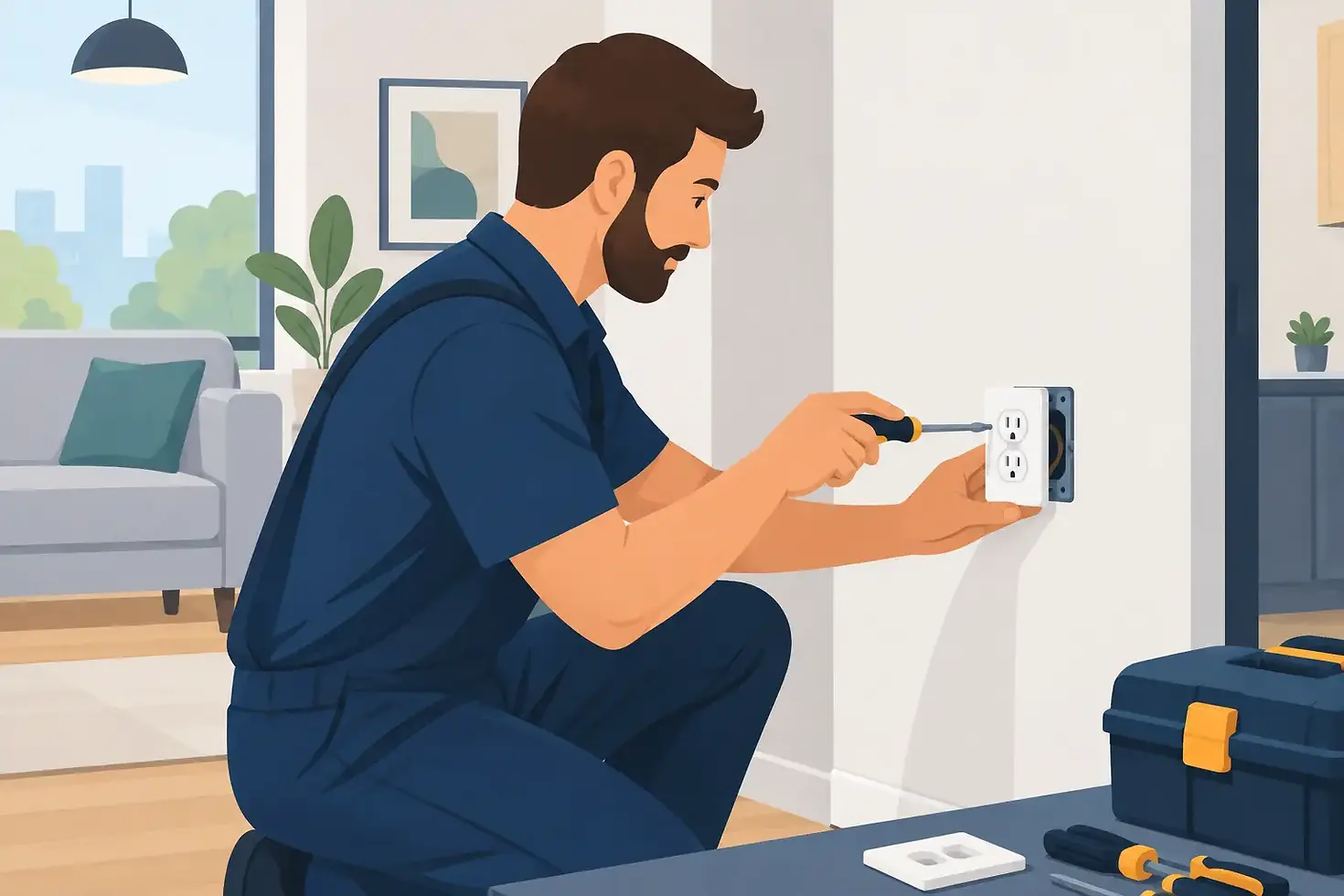
A loose socket faceplate, scorch marks around an outlet or a cracked switch can quickly become more than a minor maintenance issue in a rented property. So, can landlords replace sockets themselves? In some circumstances, yes - but the work must be done safely, the installation must remain compliant, and the landlord remains responsible if something goes wrong.
For most landlords, using a competent electrician is the clearest way to protect tenants, the property and their own position. A socket replacement may look straightforward, but hidden faults, poor earthing, damaged cables and overloaded circuits are not always visible from the front of the wall.
Can landlords replace sockets themselves?
There is no simple rule stating that a landlord must personally employ a registered electrician for every like-for-like socket replacement. However, landlords have a legal duty to ensure that the electrical installation in a rented home is safe throughout a tenancy. That duty cannot be passed to a tenant or overlooked because the job appears small.
A landlord who is genuinely competent to carry out electrical work may be able to replace a damaged socket outlet safely. Competence means more than having changed a socket before. It involves understanding safe isolation, cable identification, earthing arrangements, circuit protection, testing requirements and the condition of the wider installation.
In practice, a landlord should ask a sensible question: can I prove this work was completed safely if there is a later fault, injury, fire, insurance claim or council enquiry? If the answer is uncertain, appointing a qualified electrician is the sensible course of action.
A replacement socket should never be treated as an opportunity to work on a live circuit. Isolating the supply safely, proving it is dead with suitable test equipment and checking the completed work are essential parts of the job. Simply switching off a circuit at the consumer unit is not, by itself, a safe working method.
The landlord's electrical safety duties in England
For privately rented homes in England, the Electrical Safety Standards in the Private Rented Sector Regulations require landlords to have the fixed electrical installation inspected and tested at least every five years, or sooner if the previous report recommends it.
The landlord must provide a copy of the electrical installation condition report, commonly called an EICR, to existing tenants within 28 days of the inspection. New tenants should receive it before they move in. If remedial work is identified, it must be completed within 28 days, or within a shorter period if the report specifies one, with written confirmation supplied afterwards.
Replacing a socket does not replace the need for a valid EICR. Equally, an in-date EICR does not mean a landlord can ignore a socket that has become loose, damaged or hot to touch. The inspection report records the condition at the time of testing; landlords still need to respond to defects that arise between inspections.
If a tenant reports a socket problem, treat it as a safety concern rather than ordinary wear and tear. Ask them not to use the outlet, particularly if there is heat, discolouration, crackling, a burning smell, an electric shock or repeated tripping at the consumer unit. Arrange an assessment promptly.
When a simple replacement becomes more involved
The difference between replacing an existing accessory and altering a circuit matters. A straightforward like-for-like replacement may be a relatively small repair. Adding an extra socket, moving one to another wall, changing the circuit layout or upgrading from an old outlet can require further testing and may bring Building Regulations requirements into play.
Older rental properties across Norfolk and Suffolk can present particular challenges. A socket may have no earth conductor, cables may be brittle, wiring colours may indicate an older installation, or the back box may be damaged or too shallow for modern accessories. The visible outlet can be the first sign of a wider issue.
A qualified electrician will check more than the faceplate. They can assess polarity, earth continuity, insulation resistance where appropriate, protective device operation and the suitability of the circuit for the proposed use. This is particularly relevant where tenants rely on extension leads, portable heaters, kitchen appliances or home-working equipment.
Changing a standard socket for a USB socket should also be approached carefully. These accessories are not all the same, and some need more space in the back box or create additional heat. Quality accessories, correct connections and testing are essential, especially in a busy rental property.
Work in bathrooms and other higher-risk areas
Sockets close to bathrooms, showers or outdoor areas require extra caution. Electrical zones, moisture, circuit protection and the location of the outlet all affect what is permitted and what is safe. A landlord should not assume that an existing socket is acceptable merely because it has been there for years.
Similarly, outdoor sockets, garage supplies, garden lighting and outbuilding circuits can be exposed to water, physical damage and inadequate protection. These are jobs for a competent electrician who can assess the full circuit rather than simply replace the visible accessory.
What records should landlords keep?
Good records make property management easier and provide useful evidence that electrical safety has been handled responsibly. Keep the current EICR, details of any remedial work, invoices and relevant electrical certificates together with the property file.
For a minor repair such as replacing a socket outlet, an electrician may issue a Minor Electrical Installation Works Certificate where appropriate. This records what was changed and confirms that the work has been inspected and tested. More substantial alterations may require different certification and, where applicable, notification through a registered competent person scheme.
Documentation is valuable when a tenant changes, an agent takes over management, a property is sold or an insurer asks for evidence following a claim. It also helps the next electrician understand what has been done previously, reducing guesswork and unnecessary disruption.
Warning signs that need an electrician now
Some socket faults should be treated as urgent. Do not wait for the next planned inspection if a tenant reports any of the following:
a burning smell, smoke, buzzing or crackling
heat, melting, scorch marks or discolouration around a socket
an electric shock or tingling sensation
a socket that is loose, cracked or pulling away from the wall
repeated tripping when an appliance is connected
water damage near an outlet or electrical accessory
These signs can point to a loose connection, overloaded circuit, damaged cable, failed accessory or another fault elsewhere in the installation. The safest immediate action is to stop using the affected outlet and arrange professional advice. If there is smoke, fire or an immediate danger, isolate the supply only if it is safe to do so and contact the emergency services.
Choosing the right approach for your rental property
Landlords do not need to replace every older socket simply because it is not the newest style. The key question is its condition, suitability and safety. A sound, correctly installed socket may not need changing, while a modern-looking accessory on an ageing circuit may still require investigation.
For one clearly damaged outlet in an otherwise well-maintained home, a competent electrician can usually assess and resolve the issue efficiently. If several sockets are loose, the consumer unit is dated, tenants report regular tripping or an EICR has raised observations, it may be more cost-effective to consider the wider installation rather than repeatedly dealing with isolated faults.
Eclipse Electrical Solutions LTD provides inspection, testing, socket and switch upgrades, consumer unit work and electrical repairs for landlords and property managers across Norfolk and Suffolk. Clear quotations and properly recorded work give landlords a practical route to maintaining safe, dependable homes.
A rental property should never leave tenants wondering whether an electrical fault is safe to live with. Acting promptly on a damaged or suspect socket protects the people in the property and helps prevent a small repair from becoming a far more expensive problem.


Comments